

Description
Forthcoming: Due September
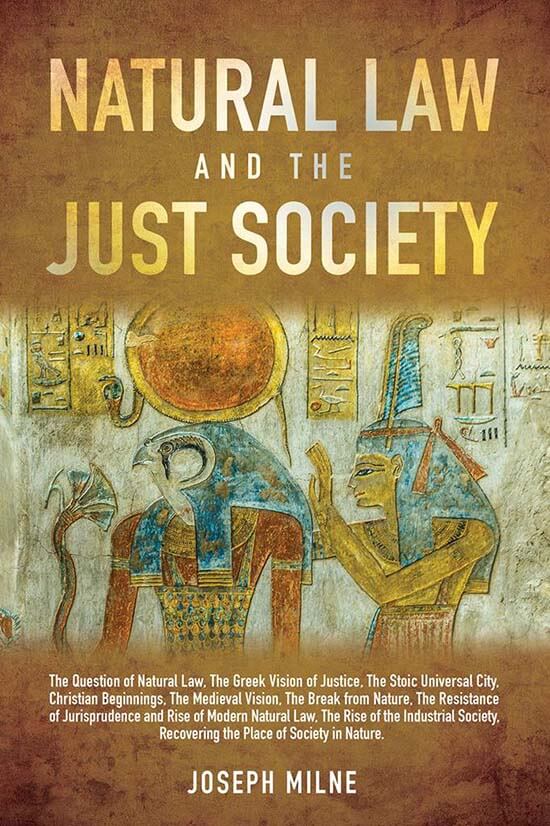
The natural law tradition is rooted in the understanding that society has a place within the universe as a whole. Just as the universe has a natural order that is balanced and just, so does human society. The ancient study of law-making was grounded in this correlation between the universal order and the order of society. When a society conforms to its own real nature, it will flourish and be just and attain its proper end.
This view of a natural social order was central to ancient political and economic theory, ranging from Hesiod, Greek philosophy, Roman jurisprudence and medieval theology. In philosophical reflection on jurisprudence, natural law has always held a special place and informed the Western understanding of justice and the good society. Society had been seen analogously to a single body with its different functions which should work harmoniously together. Law-making sought to ground itself in this natural harmony.
The present study seeks to trace the history of natural law within this wider social framework. In particular, it seeks to show that insights from the natural law tradition have practical application in our own times, especially in the search for social and economic justice.
______________________________________________
Author Details
Joseph Milne is an Honorary Lecturer at the University of Kent, where he taught on the MA course in Mysticism and Religious Experience until his retirement. He is Editor of Land & Liberty, the journal of the Henry George Foundation, and also a member of the team editing The Complete Works of Henry George.
He is the author of the Temenos Academy Papers The Ground of Being: Foundations of Christian Mysticism (2004), Metaphysics and the Cosmic Order (2008), The Mystical Cosmos (2013) and The Lost Vision of Nature (2018).
He is a contributor of chapters to Mystical Theology and Continental Philosophy (ed. D. Lewin et al.; Routledge, 2017) and to Peacefulness: Being Peace and Making Peace (ed. D. Cadman and S. Gill; Spirit of Humanity Press, 2017) He is a Trustee of The Eckhart Society and a Fellow of the Temenos Academy.
REVIEWS
Steeped in wisdom and luminous with insights, this learned study brilliantly recovers a largely forgotten and much misunderstood tradition. Through astute historical reflection and with great philosophical flair, Joseph Milne shows how a just and flourishing human society is not an artificial imposition on a hostile universe but can indeed be grounded in and in harmony with the principles of cosmic order and wisdom. This magisterial work, fruit of long reflection by a greatly respected teacher and philosopher, is a much-needed, timely source of insight for scholars as well as those concerned with the fostering of a just society in true and lasting harmony with nature.
—Dr. Valentin Gerlier, Schumacher College, Temenos Academy and Unité de Recherche Culture, Éthique, Religion, et Société, Institut Catholique Toulouse.
This well written and illuminating inquiry into the history of natural law provides deep insight into the origins and development of crucial aspects in the European tradition. In addition to being of much value in itself, such knowledge is of great importance for recognizing what characterizes our modern situation, and thereby also for being able to conceive more clearly of fundamentally different and urgently needed paths to move in the present time. This fine piece of scholarly endeavour deserves a broad readership.”
—Tollef Graff Hugo, MF Norwegian School of Theology, Religion and Society (Oslo), Universitat Pompeu Fabra (Barcelona).
This book is not only timely in providing hope and direction when they are desperately needed, but moreover it is timely because it concerns an underlying wisdom that is eternal and thus for all times. Consequently, it does not offer yet another projected world view in the form of a panacea, but more subtly a comprehensive record of how humanity has always understood the connection between itself, nature and the divine in the form of a fundamental order and harmony pervading all as law. In the process, our understanding of what law, justice, cosmos, myth, society, truth, goodness, intelligence and so forth are is greatly expanded, especially as they must be understood together. Thus, this study is not within this or that area of philosophy, it concerns the whole tree from root to branch. Hence it can be said, for example, that the created order is good. Nor does it pitch one culture against the other, for it demonstrates how a universal intuition of law and justice permeates them all. Nor is this work a mere history of ideas, for it is a philosophical tapestry of interwoven threads detailing the whole historical narrative that forms the Natural Law tradition. Accordingly, we learn how human nature and society being natural have always been a part of Nature as a whole. Yet, following the Enlightenment, humanity has not only set itself apart from Nature, but also against it. It is therefore unflinching in honestly and frankly exposing the misguided limitations of our current imperialist world views, especially in the form of materialism, individualism and scientism. Sadly, the consequences of a humanity alienated from Nature, and thus its own nature, are plain to see. Nevertheless, we are shown how the modern age might once again form a just society as part of the natural order. This book is clearly the result of meticulous scholarship, deep reflection, perceptive insights and lucid articulation over a long period of time, all serving to make Joseph Milne an important contributor to scholarship on the Natural Law tradition.
—Dr Duane Williams, Associate Professor, School of Humanities, Liverpool Hope University